
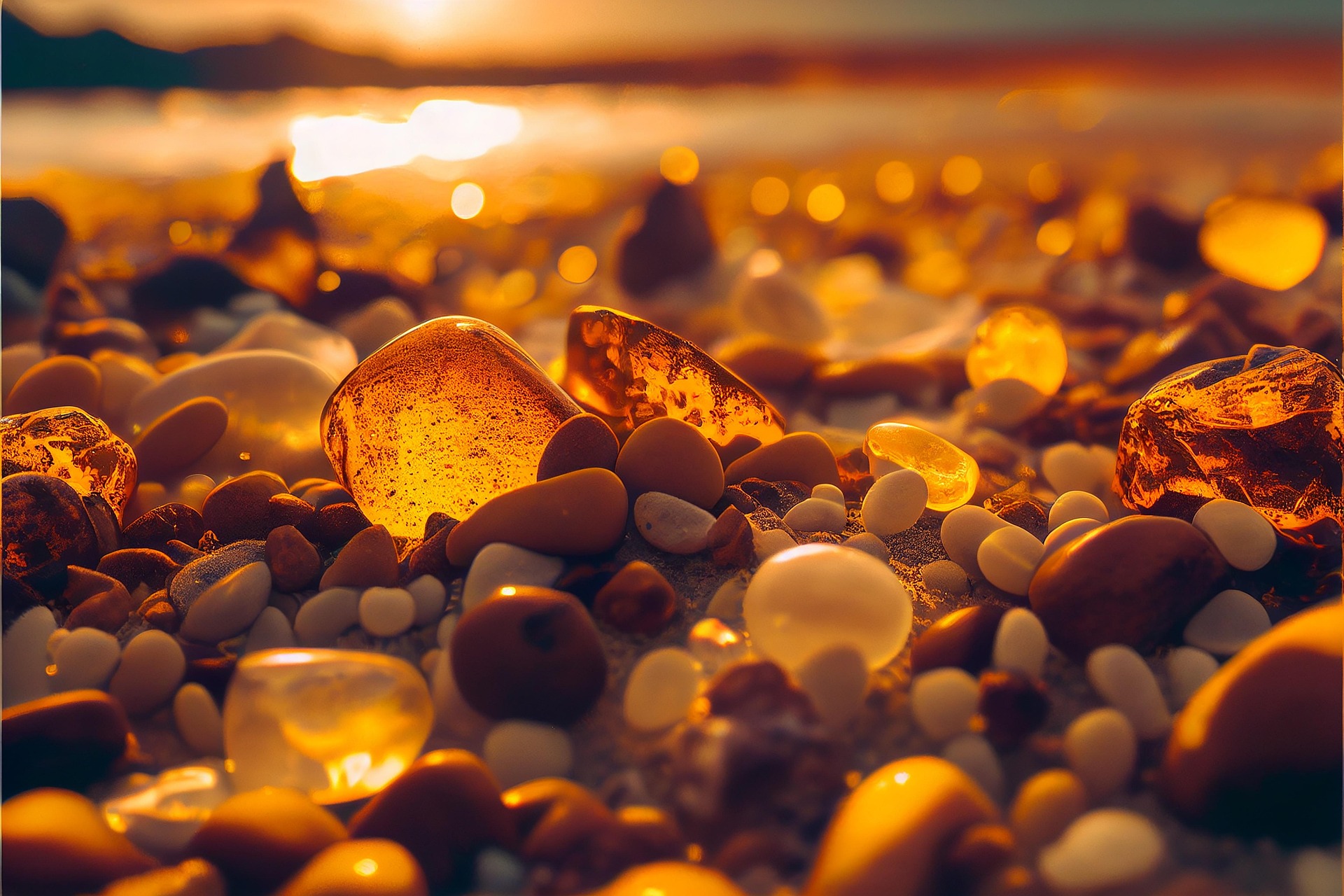
Amber is one of the most common fragrance descriptions, yet it is also one of the most misunderstood.
Unlike citrus or rose, it does not point to a single, identifiable material. Instead, it describes a type of scent, one that is warm, smooth, and enveloping.
Many people assume they already know what amber smells like. In reality, there is no single scent that defines it. What most people recognize as “amber” is just one interpretation within a much broader range.
To understand it, it helps to look at where the word comes from, how it evolved, and how perfumers use it today.
Where the Word “Amber” Comes From
The confusion around amber begins with the word itself.
Historically, amber referred to two entirely different substances:
- Ambergris, a rare material produced by sperm whales, valued in perfumery for its soft, diffusive warmth and subtle marine, skin-like character
- Fossilized amber resin (often called Baltic amber), a golden material used in jewelry, which has very little scent
In early perfumery, ambergris was often shortened simply to “amber.” At the same time, the visual qualities of fossilized amber, its color, warmth, and richness, influenced how the word was understood more broadly.
As natural ambergris became scarce and more restricted, its use in perfumery declined. Meanwhile, perfumers were already building warm, long-lasting bases from resins like labdanum, benzoin, and vanilla.
These resin accords did not evolve from ambergris and do not smell similar. They developed separately, with a richer, sweeter, and more balsamic character.
Over time, the word amber expanded beyond its original meaning. It came to describe not just ambergris, but any fragrance built around warmth, softness, and longevity.
This is why “amber” now refers to two distinct scent profiles that share a name, but not a smell.
Amber Is an Accord, Not a Single Ingredient
In modern perfumery, amber is not something that can be extracted or used as a single raw material.
It is an accord, a constructed blend designed to create a unified effect.
A traditional amber accord is often built from:
- Labdanum, which brings a rich, resinous, slightly leathery depth
- Vanilla or vanillin, which adds softness and a gentle sweetness
- Benzoin, which contributes a smooth, balsamic warmth
Together, these materials create the familiar amber profile: warm, rounded, and continuous rather than sharp.
This is why amber feels less like a distinct note and more like an atmosphere.
The Core Character of Amber
Most amber fragrances share a recognizable structure.
They tend to feel:
Warm
Resinous
Softly sweet
Smooth and rounded
This combination creates depth without sharp edges. The scent does not open in a bright or immediate way. Instead, it settles and expands gradually.
It often feels more like a glow than a clearly defined note.
What Amber Smells Like (In Familiar Terms)
Because amber is an accord, people often describe it through comparison.
You might notice elements that resemble:
Warm honey, especially the slightly herbal or resinous kind
Vanilla, but deeper and less sugary
A subtle cola-like effect, where sweetness meets spice and warmth
Soft resins, slightly balsamic and golden
These impressions do not appear separately. They blend into a single, cohesive effect that feels smooth and continuous on the skin.
Ambergris vs Resin-Based Amber
Although they share a name, these two scent profiles are quite different.
Ambergris-style materials tend to feel:
- soft, musky, and slightly mineral
- airy and diffusive
- subtly marine or skin-like
Resin-based amber accords tend to feel:
- warmer and denser
- sweeter and more balsamic
- richer and more enveloping
The connection between them is not scent, but function and effect. Both contribute warmth and longevity, and both form the foundation of a fragrance rather than its top impression.
From Ambergris to Modern “White Amber”
As natural ambergris became less available, perfumers began using materials that capture aspects of its character.
One of the most important is ambroxan, which offers:
- a smooth, mineral warmth
- a subtle musky diffusion
- a clean, skin-like presence
Materials like ambroxan, along with soft musks and related molecules, are often used to create what is now described as white amber.
White amber does not resemble traditional resin-based amber. Instead, it is lighter, more transparent, and closer to the natural scent of skin. It tends to feel clean, airy, and quietly radiant rather than rich or sweet.
Why Amber Can Smell So Different
Because amber is constructed rather than extracted, it can be shaped in many directions.
Some ambers lean:
- sweet and creamy
- dry and resinous
- powdery and soft
- dark and smoky
Others introduce woods, musks, or spices that shift the overall character.
Two fragrances can both be described as “amber” and still smell completely different. When someone believes they recognize amber, they are usually recalling one specific interpretation.
Traditional Amber, Ambery, and Woody Amber
As perfumery evolved, the idea of amber expanded beyond the traditional resin-and-vanilla structure.
You will often see terms like:
- amber
- ambery
- woody amber
Traditional amber stays close to the classic formula, with a fuller, resinous warmth and a soft sweetness.
Ambery fragrances reinterpret that structure, sometimes making it lighter, smoother, or more abstract.
Woody ambers often rely on modern aroma molecules to create a drier, more diffusive warmth. These can feel slightly mineral, radiant, or airy, with less sweetness and more projection.
This is part of why the word “amber” now covers such a wide range of scents.
A Note on “Oriental” Fragrances
Historically, many amber-based perfumes were grouped under the term “oriental.”
Today, that term is used less often. It has largely been replaced by more specific descriptions such as amber, ambery, or resinous.
These fragrances typically share a similar structure: warmth, soft sweetness, and a lingering, enveloping base built from resins, balsams, and vanilla.
Traditional Amber vs White Amber
Not all amber fragrances feel dense or resinous.
Traditional amber leans deeper and more grounded, often with noticeable richness and warmth.
White amber, by contrast, is lighter and more transparent. It still carries warmth, but without the density. It is often paired with soft musks and clean elements, creating a scent that sits closer to the skin.
In our collection:
- Classic Amber reflects a traditional amber profile, built around labdanum, vanilla, and soft woods
- Head Shop explores a deeper, more resin-forward amber with patchouli, benzoin, tonka bean, and labdanum
- Aria moves toward a white amber style, where the warmth is airy, clean, and supported by soft musk and subtle florals
Each represents a different interpretation of amber rather than a single definition.
How Amber Wears on Skin
Amber tends to stay close.
It does not usually announce itself in the way citrus or bright florals might. Instead, it develops gradually and lingers, creating a consistent, comfortable presence.
Over time, it becomes softer and more blended, often merging with the natural scent of skin. This is part of what makes it feel personal and easy to wear.
Why People Are Drawn to Amber
Amber feels familiar, even to people who cannot immediately identify it.
It reflects warmth, softness, and a sense of ease. For some, it feels comforting. For others, it feels subtly sensual. In both cases, it avoids sharpness or intensity.
Because of this, it works well as an everyday scent. It does not demand attention, but it leaves a lasting impression.
How to Know If You’ll Like Amber
If you tend to prefer fragrances that feel:
Warm rather than fresh
Smooth rather than sharp
Close-wearing rather than projecting
then amber is often a good place to start.
The best way to understand it, however, is to experience it directly. Because amber is an accord, not a fixed material, it will always shift depending on the composition and the skin it is worn on. We encourage you to try samples of our ambers to see if amber is for you.