
If you have spent any time exploring fragrance, you have likely come across the word “amber.”
The term appears often, yet it rarely points to a single, clearly defined material. Depending on context, it can suggest a gemstone, a marine substance, or a scent profile. This overlap makes it one of the most misunderstood terms in perfumery.
Understanding the term helps clarify how many fragrances are built and described.
Amber as a Fossil Material
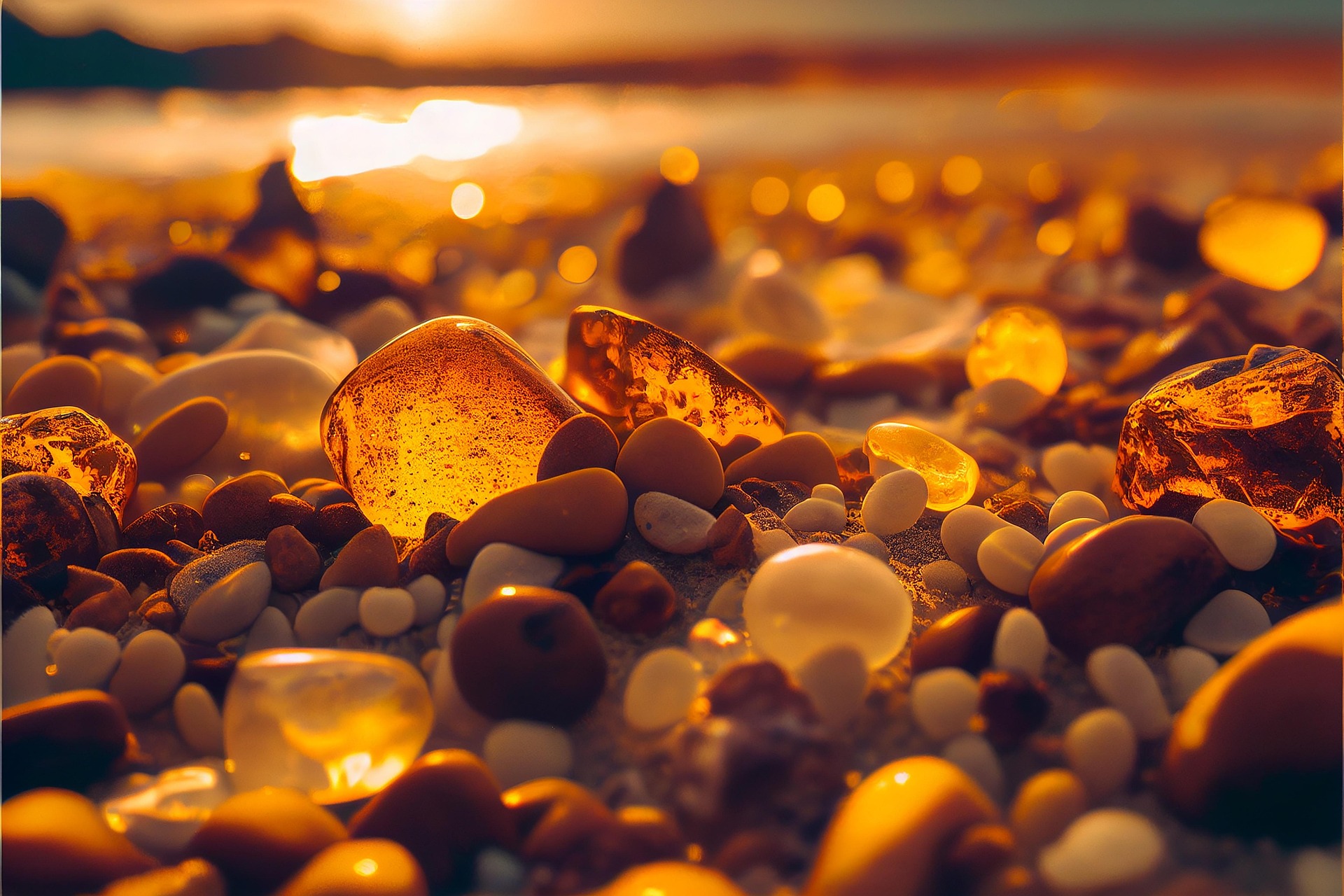
Many people first encounter it as Baltic amber, a fossilized tree resin formed millions of years ago.
Jewelers value it for its warm, golden color and its ability to preserve ancient inclusions. Despite its visual appeal, it does not contribute a meaningful scent to fragrance.
Its influence remains visual and symbolic. The color and perceived warmth helped shape how perfumers and wearers associate the term with a certain type of scent.
Ambergris and Its Role in Perfumery
Another source of confusion comes from ambergris.
Sperm whales produce this material in their digestive systems. As it ages, it develops a complex scent profile and acts as a fixative that helps extend other notes.
Perfumers once relied on it more heavily, but today they rarely use it due to cost, sourcing limitations, and the availability of modern alternatives.
Despite the similarity in name, ambergris and the amber accord represent entirely different ideas.
The Amber Accord
In contemporary perfumery, “amber” usually refers to an accord rather than a single material.
Perfumers build this accord to create a warm, resinous, slightly sweet impression. No single natural material produces this exact profile on its own.
Classic versions often include:
- Labdanum, which provides rich, resinous depth
- Vanillin, which adds softness and warmth
- Supporting materials such as benzoin, tonka, or patchouli
Together, these elements create a cohesive scent that feels smooth, warm, and persistent.
A traditional expression of this style appears in fragrances built around labdanum and vanilla, where warmth and depth take center stage. In our own work, Classic Amber follows this direction, combining labdanum, vanilla, and spice into a fuller composition with a soft woody core.
As a Scent Profile
Because it is an accord, it functions more as a category than a single ingredient.
People often describe this profile as:
- Warm
- Resinous
- Softly sweet
- Smooth and enveloping
These qualities shift depending on how the perfumer builds the composition. Some lean drier and more resin-forward, while others emphasize softness or sweetness.
Not all interpretations follow the same structure. Some move in a lighter direction and focus on transparency and skin-like warmth rather than density. Fragrances built around white amber fall into this category. In our lineup, Aria reflects this approach, where the effect appears as a clean, airy presence supported by soft musk and subtle florals.
How We Approach Amber
At Exuma Fragrance Co., we treat it as a compositional idea rather than a fixed formula.
We build accords with materials that create warmth, depth, and continuity on the skin. We focus on how the fragrance develops over time rather than tying it to a literal reference.
This approach keeps the emphasis on experience rather than definition.
Why the Distinction Matters
The term can suggest different things depending on context. Without clarification, it often leads to mismatched expectations.
When you recognize it as an accord, you can better understand what a fragrance intends to convey. This shift moves the focus from literal interpretation to sensory experience.
Perfumery relies on this kind of constructed language, and this is one of the clearest examples.